Uptime monitoring
Know the moment your websites and endpoints go down. UpDog runs reliable checks, tracks response times, and routes alerts fast—so you can fix issues before customers notice.
The basics done right
Uptime monitoring should be simple: reliable checks, clear history, and fast notifications. UpDog focuses on the essentials so you can respond quickly.
Instant detection
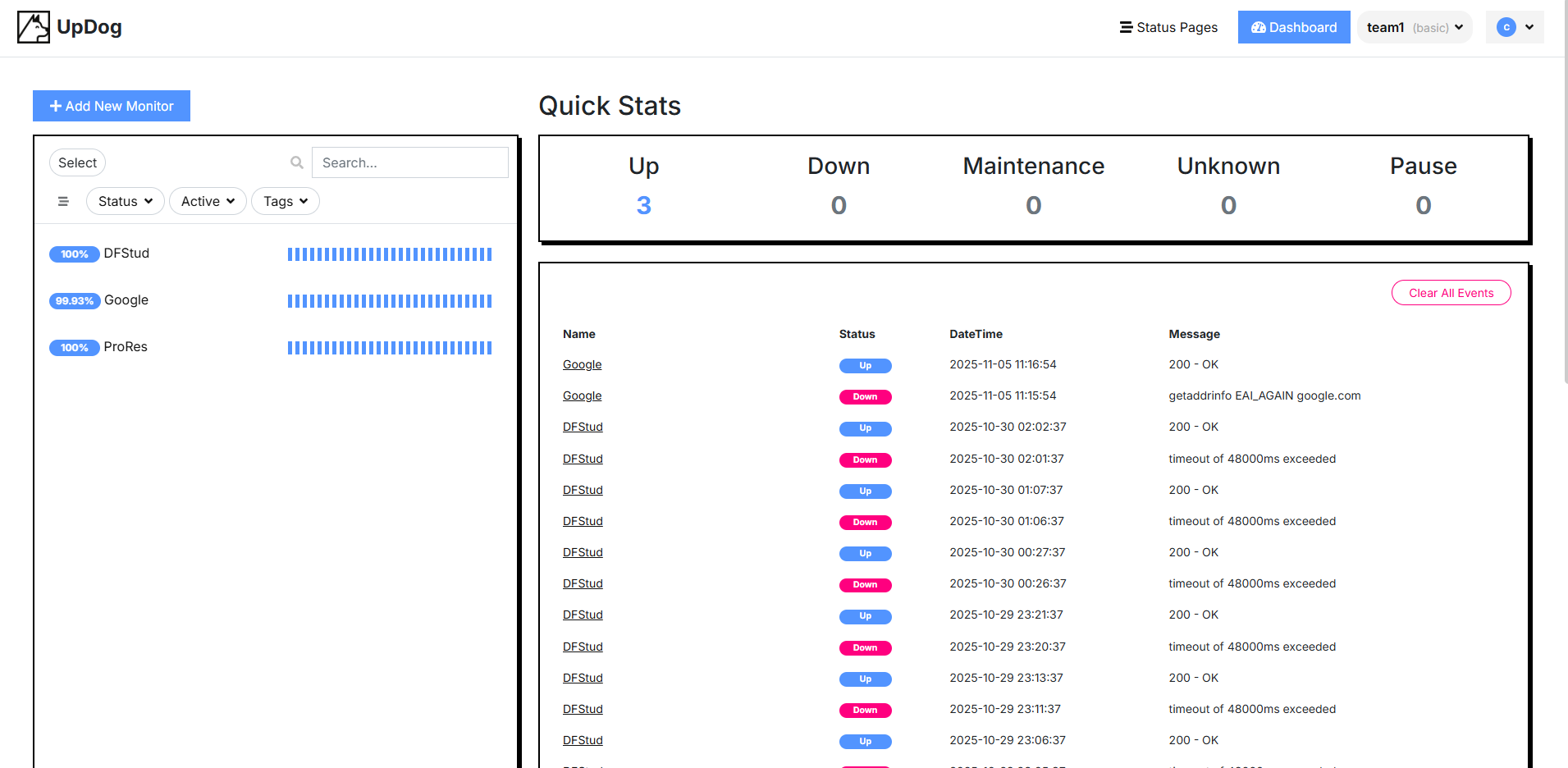
Run consistent checks to catch outages quickly. See when it happened, how long it lasted, and how often it recurs.
Clear reporting
Track uptime and response-time trends. Share a clean history with your team when you’re reviewing incidents.
Smart alerts
Route notifications to email, chat, on-call tools, and webhooks so the right person gets pinged at the right time.
FAQ
Types of monitoring
UpDog supports multiple check types for comprehensive coverage:
- Website monitoring – HTTP/HTTPS uptime checks
- Response time monitoring – Latency tracking
- DNS monitoring – Record change detection
- SSL monitoring – Certificate expiry alerts
- Port monitoring – TCP connectivity checks
- Ping monitoring – ICMP availability
- Keyword monitoring – Content verification
- Cron job monitoring – Heartbeat/dead man's switch
Complete the picture
Monitoring is just the start. Build a complete reliability workflow:
- Status pages – Keep users informed during incidents
- Teams & organizations – Collaborate on monitoring with your team
- Alert integrations – Route notifications to Slack, email, SMS, PagerDuty, and more
Free tools
Calculate your downtime budget with our uptime/SLA calculator, or debug errors with the HTTP status code reference.
Ready to start monitoring?
It takes less than 30 seconds to set up your first check. No credit card required for the free plan.
Get Started